Mostrando entradas con la etiqueta Quimica. Mostrar todas las entradas

jueves, 31 de agosto de 2017

Alcohols

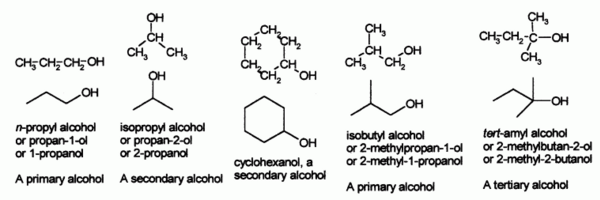
In chemistry, an alcohol is any organic compound in which the hydroxyl functional group (–OH) is bound to a saturated carbon atom .

The term alcohol originally referred to the primary alcohol ethanol (ethyl alcohol), the predominant alcohol in alcoholic beverages.
To measure how "strong" alcohols are we use alcohol by volume (abbreviated as ABV, abv, or alc/vol) which is a standard measure of how much alcohol (ethanol) is contained in a given volume of an alcoholic beverage (expressed as a volume percent). It is defined as the number of millilitres (mL) of pure ethanol present in 100 mL of solution at 20 °C.
The alcoholic beverages I am going to explain are Beer, Whisky and Vodka.

Blood alcohol test: 

A blood alcohol test measures the amount of alcohol (ethanol) in your body. Alcohol is quickly absorbed into the blood and can be measured within minutes of having an alcoholic drink. The amount of alcohol in the blood reaches its highest level about an hour after drinking. But food in the stomach may increase the amount of time it takes for the blood alcohol to reach its highest level. About 90% of alcohol is broken down in the liver.


Beer:

The strength of modern beer is usually around 4% to 6% ABV, although it may vary between 0.5% and 20%, with some breweries creating examples of 40% ABV and above.
Beer is made from four basic ingredients: Barley, water, hops and yeast. The basic idea is to extract the sugars from grains (usually barley) so that the yeast can turn it into alcohol and CO2, creating beer.7

Resultado de imagen para beer


  • Malting: The brewing process starts with grains. The grains are harvested and processed through a process of heating, drying out and cracking. The main goal of malting is to isolate the enzymes needed for brewing so that it’s ready for the next step.
  • Mashing: The grains then go through a process known as mashing, in which they are steeped in hot, but not boiling, water for about an hour. This activates enzymes in the grains that cause it to break down and release its sugars. Once this is all done you drain the water from the mash which is now full of sugar from the grains. This sticky, sweet liquid is called wort, which is unmade beer.
  • Boiling: The wort is boiled for about an hour while hops and other spices are added several times. Worts provide bitterness to balance out all the sugar in the wort and provide flavor. They also act as a natural preservative, which is what they were first used for.
  • Fermentation: Once the hour long boil is over the wort is cooled, strained and filtered. It’s then put in a fermenting vessel and yeast is added to it. At this point the brewing is complete and the fermentation begins. The beer is stored for a couple of weeks at room temperature or many many weeks at cold temperatures while the yeast works its fermentation. The yeast eats up all that sugar in the wort and liberates CO2 and alcohol as waste products.
  • Bottling and Aging: You’ve now got alcoholic beer, however it is still flat and non carbonated. The flat beer is bottled, at which time it is either artificially carbonated like a soda, or if it’s going to be ‘bottle conditioned’ it’s allowed to naturally carbonate via the CO2 the yeast produces.
Whisky:

Most whiskies are sold at or near an alcoholic strength of 40% ABV, which is the statutory minimum in some countries – although the strength can vary, and cask-strength whisky may have as much as twice that alcohol percentage.

Resultado de imagen para whisky

A still for making whisky is usually made of copper, since it removes sulfur-based compounds from the alcohol that would make it unpleasant to drink. Modern stills are made of stainless steel with copper innards (piping, for example, will be lined with copper along with copper plate inlays along still walls). The simplest standard distillation apparatus is commonly known as a pot still, consisting of a single heated chamber and a vessel to collect purified alcohol.

Vodka:

Since the 1890s, the standard Polish, Russian, Belarusian, Ukrainian, Estonian, Latvian, Lithuanian and Czech vodkas are 40% ABV. The European Union has established a minimum of 37.5% ABV for any "European vodka". Products sold as "vodka" in the United States must have a minimum alcohol content of 40%. Even with these loose restrictions, most vodka sold contains 40% ABV.

Resultado de imagen para vodka

Vodka may be distilled from any starch or sugar-rich plant matter; most vodka today is produced from grains such as sorghum, corn, or wheat. Some vodkas are made from potatoes, soybeans, grapes, rice, sugar beets.

The master distiller is in charge of distilling the vodka and directing its filtration, which includes the removal of the "foreshots", "heads" and "tails". These components of the distillate contain flavor compounds such as ethyl acetate and ethyl lactate (heads) as well as the fusel oils (tails) that impact the usually desired clean taste of vodka. Through numerous rounds of distillation, or the use of a fractionating still, the taste is modified and clarity is increased.
Depending on the distillation method and the technique of the stillmaster, the final filtered and distilled vodka may have as much as 95–96% ethanol. As such, most vodka is diluted with water prior to bottling.

Consequences:

Most alcoholic drinks have ethyl alcohol; this plus the quantity the user drinks can lead to cause a blood alcohol concentration (BAC) of:


  • 0.03%-0.12%: typically causes an overall improvement in mood and possible euphoria, increased self-confidence and sociability, decreased anxiety, a flushed, red appearance in the face and impaired judgment and fine muscle coordination.


  • 0.09% to 0.25%: causes lethargy, sedation, balance problems and blurred vision. 


  • 0.18% to 0.30% causes confusion, impaired speech, dizziness and vomiting.


  • 0.25% to 0.40% causes stupor, unconsciousness, vomiting and respiratory depression (potentially life-threatening).


  • 0.35% to 0.80% causes unconsciousness, life-threatening respiratory depression and possibly fatal alcohol poisoning. 

domingo, 7 de mayo de 2017

Tipos de agua y su pH

Gasificada:
El agua gasificada o carbonatada es el agua que se le agrega ácido carbónico (H2CO3), formando así un proceso que como resultado de esta descomposición se libera agua (H2O) y dióxido de carbono (CO2). (H2CO3= CO2+H20) . Estos iones se unen para formar ácido carbónico formando un círculo que termina hasta que las condiciones de frío y presión ya no sean capaces para conservar el (CO2). El pH de estas bebidas está entre 2 o 3.
Resultado de imagen para agua gasificada
Mineral:
El agua mineral tiene minerales y sales que son aptos para el consumo humano. Suele aportar hierro (Fe) , calcio (Ca(OH)2+), sodio (NaOH-), magnesio (Mg(OH)2), fluor (F-), potasio (KOH+) y bicarbonato (HCO3-) que dan beneficios al organismo.
Todos estos componentes menos fluoruro y bicarbonato son iones fuertes que no reaccionan con el agua. El flour y el bicarbonato son aniones débiles que hacen hidrólisis. El pH de este tipo de agua depende en la marca, ya que en cada marca varía la cantidad de minerales, pero no varía mas que entre 6 y 8.


(F-)+(H2O)⇢(HF+)+(HO-)     -     (HCO3-)+(H2O)⇢(H2CO3) + (OH-)
Resultado de imagen para agua mineral

Destilada:
Es totalmente apta para el consumo aunque hace falta de sales o minerales esenciales para el cuerpo. Al ser su fórmula química H2O y al ser casi un agua pura su pH es muy cercano al 7. Su hidrólisis da como resultado un hidronio H3O y un oxidrilo OH.
Resultado de imagen para agua destilada

Dura:

Se conoce como agua dura a aquella que dificulta el desarrollo de espuma al estar en contacto con jabón, debido a que presenta una elevada cantidad de bicarbonatos y carbonatos de magnesio y de calcio. Al haber mas concentraciones de cationes que de aniones, se podría considerar que su pH será mayor a 8. Contienen muchos iones positivos, como el calcio y el magnesio.

(COONa)+(Ca²⁺)→(Ca(R-COO)2)+(2Na)
Resultado de imagen para agua dura y blanda


Agua dulce:
Es el agua de lagos y rios, lluvia, hielo y nieve. Estos tienen una baja concentracion de sales. Su pH esa entre 6.5 y 8.7.

Subterránea:
El agua subterránea es parte de la precipitación que se filtra a través del suelo. Debido a que es agua “reciclada” está compuesta de sales casi totalmente disociadas, minerales y otros iones. Al variar su diversidad de iones, sales y minerales su pH es dificil de determinar.  En aquellas agua subterráneas que no estén contaminadas por terceros su pH oscila en 8,3. En aguas contaminadas no aptas para consumo humano, la concentración de sustancias es mucho mayor. Están formadas por aniones como (HCO; +Coa). Cl-, SO,=. NO, cationes como Ca". Mg". Na'. K'. NH,' y Coi. O,. Si04H, o Si02 (siendo estos los constituyentes mayoritarios), F-, S=. SH-. Br; 1.. NO, PO,'. E03, Mn". Fe". Li'. Sr". Zn". (como constituyentes minoritarios) y Al"'. Ti',. Co". Cu". Pb++. Ni". Cr"(como constituyentes traza).
Resultado de imagen para agua subterranea


Agua de mar:
Se puede decir que básicamente el mar es una solución acuosa de sales, característica que le confiere su sabor. De estas sales, el cloruro de sodio, conocido como sal común, destaca por su cantidad, ya que constituye por sí sola el 80 por ciento de las sales. El restante 20 por ciento corresponde a los otros componentes. El agua oceánica es ligeramente alcalina, y el valor de su pH está entre 7.5 y 8.4 y varía en función de la temperatura; si ésta aumenta, el pH disminuye y tiende a la acidez; también puede variar en función de la salinidad, de la presión o profundidad y de la actividad vital de los organismos marinos.

Resultado de imagen para agua de mar imagenes

Lluvia acida:
se forma cuando la humedad del aire se combina con óxido de nitrógeno, el dióxido de azufre y el trióxido de azufre emitidos por fábricas, centrales eléctricas, calderas de calefacción y vehículos que queman carbón o productos derivados del petróleo que contengan azufre. En interacción con el agua de la lluvia, estos gases forman ácido nítrico, ácido sulfuroso y ácido sulfúrico. Finalmente, estas sustancias químicas caen a la Tierra acompañando a las precipitaciones, constituyendo la lluvia ácida. La lluvia normalmente presenta un pH de aproximadamente 5.65 (ligeramente ácido), debido a la presencia del CO2 atmosférico, que forma ácido carbónico, H2CO3. Se considera lluvia ácida si presenta un pH menor que 5 y puede alcanzar el pH del vinagre (pH 3), valores que se alcanzan cuando en el aire hay uno o más de los gases citados.
Se forma porque una gran parte del SO2 (dióxido de azufre) emitido a la atmósfera procede de la emisión natural que se produce por las erupciones volcánicas, que son fenómenos irregulares. Sin embargo, una de las fuentes de SO2 es la industria metalúrgica. El SO2 puede proceder también de otras fuentes, por ejemplo como el sulfato de dimetilo, (CH3)2S, y otros derivados, o como sulfuro de hidrógeno, H2S. Estos compuestos se oxidan con el oxígeno atmosférico dando SO2. Finalmente el SO2 se oxida a SO3 (interviniendo en la reacción radicales hidroxilo y oxígeno) y este SO3 puede quedar disuelto en las gotas de lluvia, es el de las emisiones de SO2 en procesos de obtención de energía: el carbón, el petróleo y otros combustibles fósiles contienen azufre en unas cantidades variables (generalmente más del 1 %), y, debido a la combustión, el azufre se oxida a dióxido de azufre.
Resultado de imagen para lluvia acida imagenes